
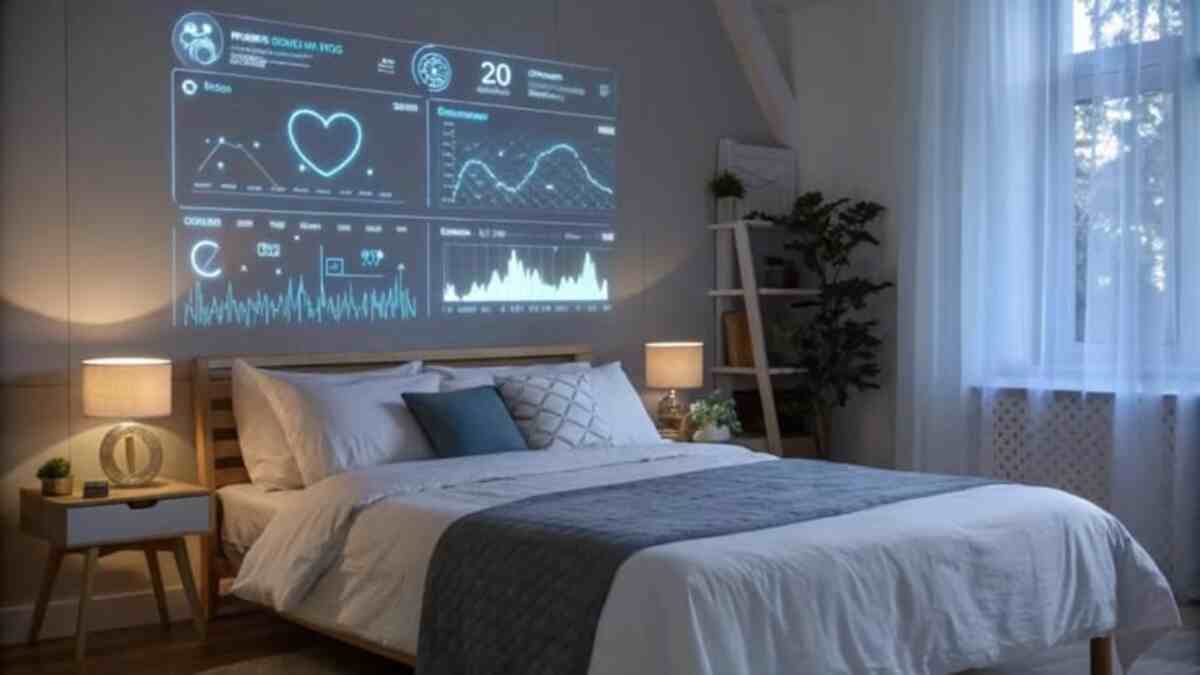
The market for smart beds is emerging from sleep scores as makers add new sensors to get a more comprehensive view of what happens over the night. Some new systems are capable of measuring heart rate breathing movement and body temperature, with artificial intelligence helping to analyze that information and spot anything worth monitoring.
One example is Eight Sleep’s Pod 6, introduced in September 2026. Its updated sensor system uses 18 biometric sensors across the bed’s cover, compared with two primary sensors in the previous generation. The company says the expanded array helps distinguish individual sleepers’ signals and improve monitoring when partners move around or share the bed with children or pets.
These innovations are part of a larger trend in health technology for consumers. The idea of wearing a watch or a ring for around-the-clock health monitoring has become more comfortable, but some don’t want to wear anything overnight. Sensor-fitted beds provide another option by collecting signals while you sleep without needing a device worn on your person.
Contemporary smart beds monitor minuscule motions from respiration and heartbeat through the mattress, or a cover. The process, ballistocardiography, measures changes in the actual mechanically generated by the body’s actions related to heart rate, respiratory rate, movement, and certain measures of sleep continuity. Algorithms can then derive heart rate, respiratory rate, movement, and certain measures of sleep continuity from these responses.
The benefit is convenience. Rather than using a night’s reading from a wearable, people could gather data across several nights in the comfort of their normal sleep settings. Over time, these records could show their sleeping time, breathing rates or overnight heart rates.
Temperature control is also a notable feature in some connected beds. Products like Eight Sleep’s Pod can adjust the temperature of the sleeping surface during the night. Manufacturers are increasingly integrating these comfort features with biometric monitoring to offer a more unified sleep and wellness experience.
One of the most clinically relevant developments is the application of bed sensors for early detection of indicators of sleep apnea, where breathing momentarily stops numerous times during sleep. Sleep apnea often means snoring and sleepiness.
A July 2025 Scientific Reports study tested a non-invasive smart-bed platform against the Labgold standard sleep test, polysomnography. Of 104 individuals tested, the approach identified people with moderate-to-severe sleep apnea with 83.3% accuracy, 76% sensitivity, and 85% specificity. The researchers called the result promising but the study encouraging while noting that further validation is needed over more nights and in the real world.
Another study, published in npj Digital Medicine in June 2026, tested AI-enabled monitoring with an under-mattress sensor for three months. Out of 92 people who were analyzed in the final results, the system detected 77% of cases of OSA and 85% of cases that weren’t OSA when tested against a one-night sleep study. The results indicate repetitive home monitoring may be able to reveal people whose symptoms change on different nights.


